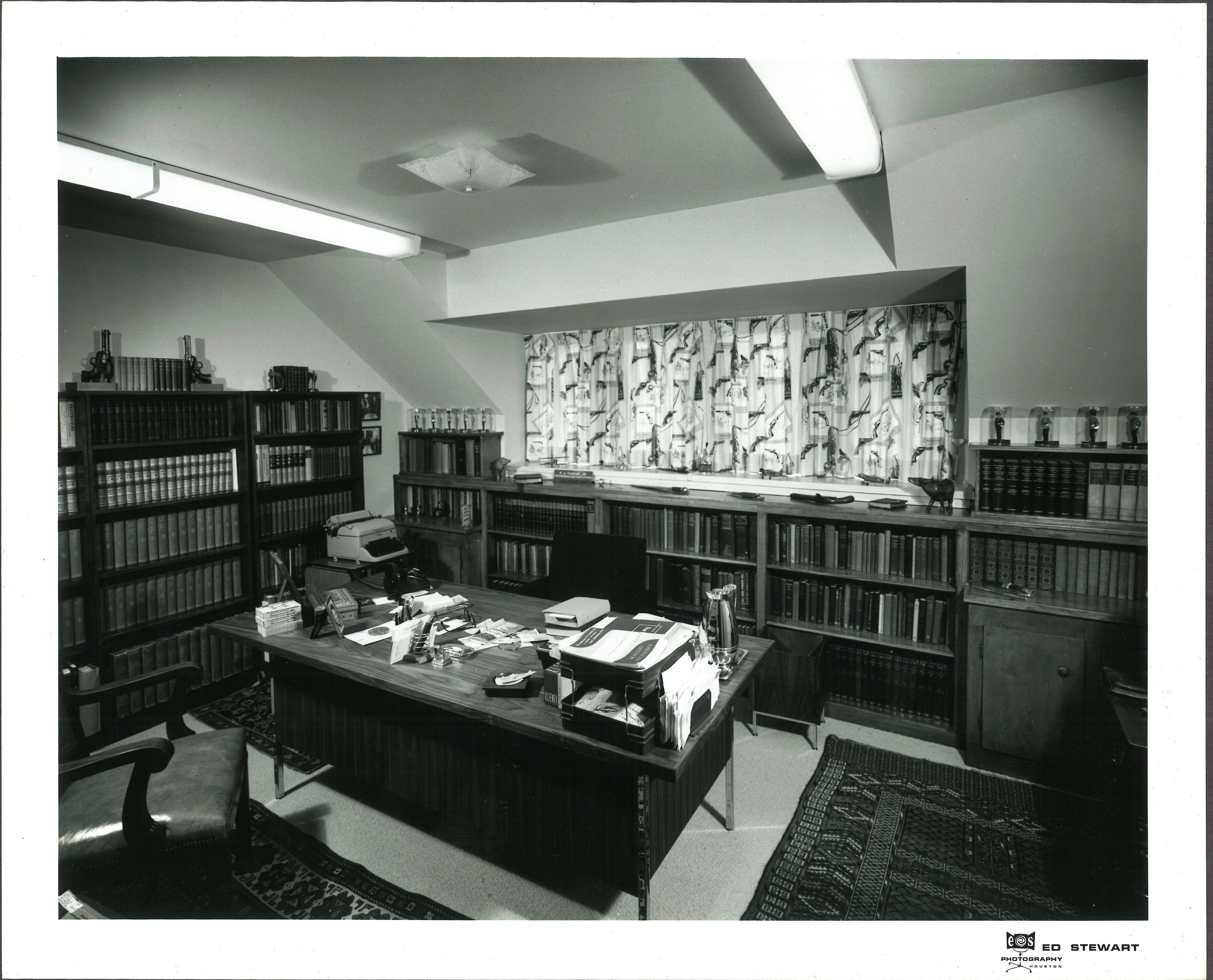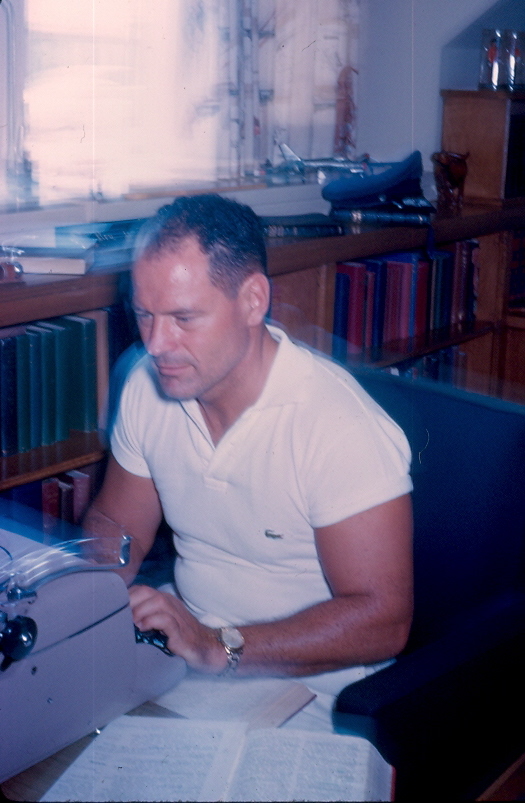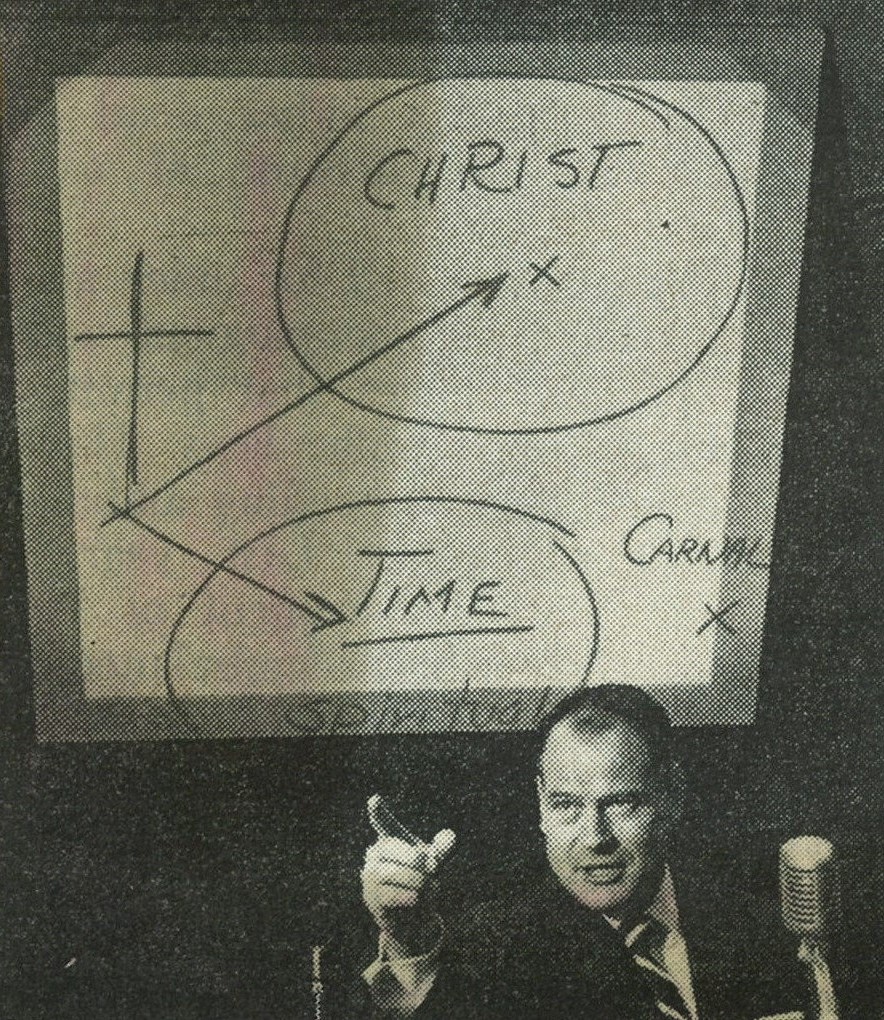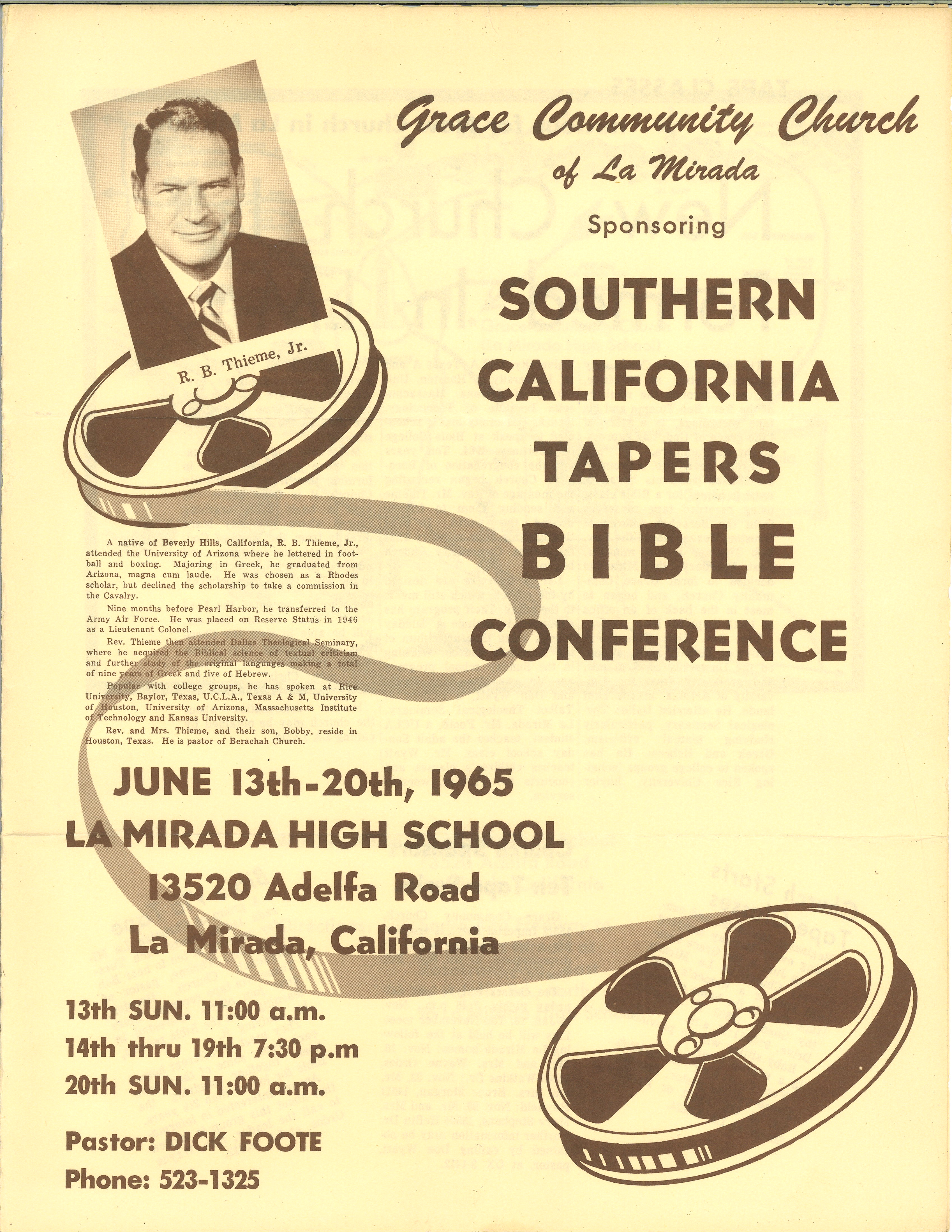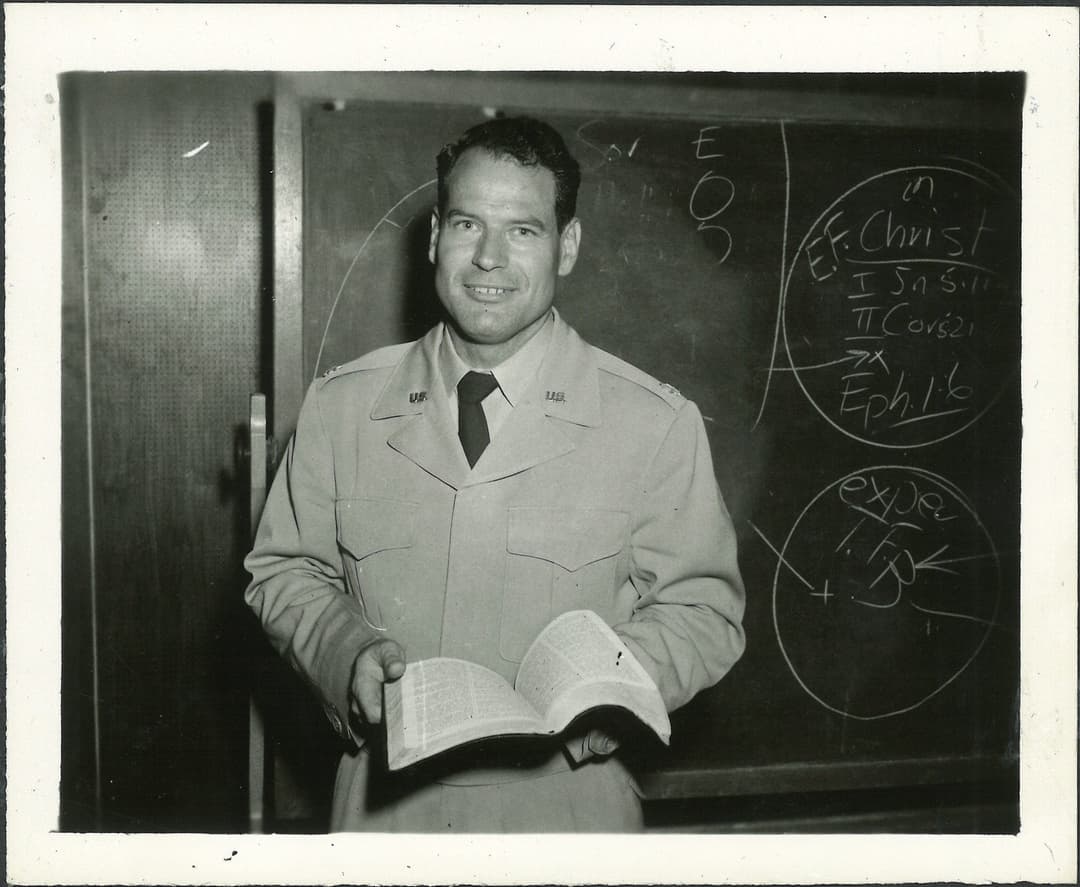
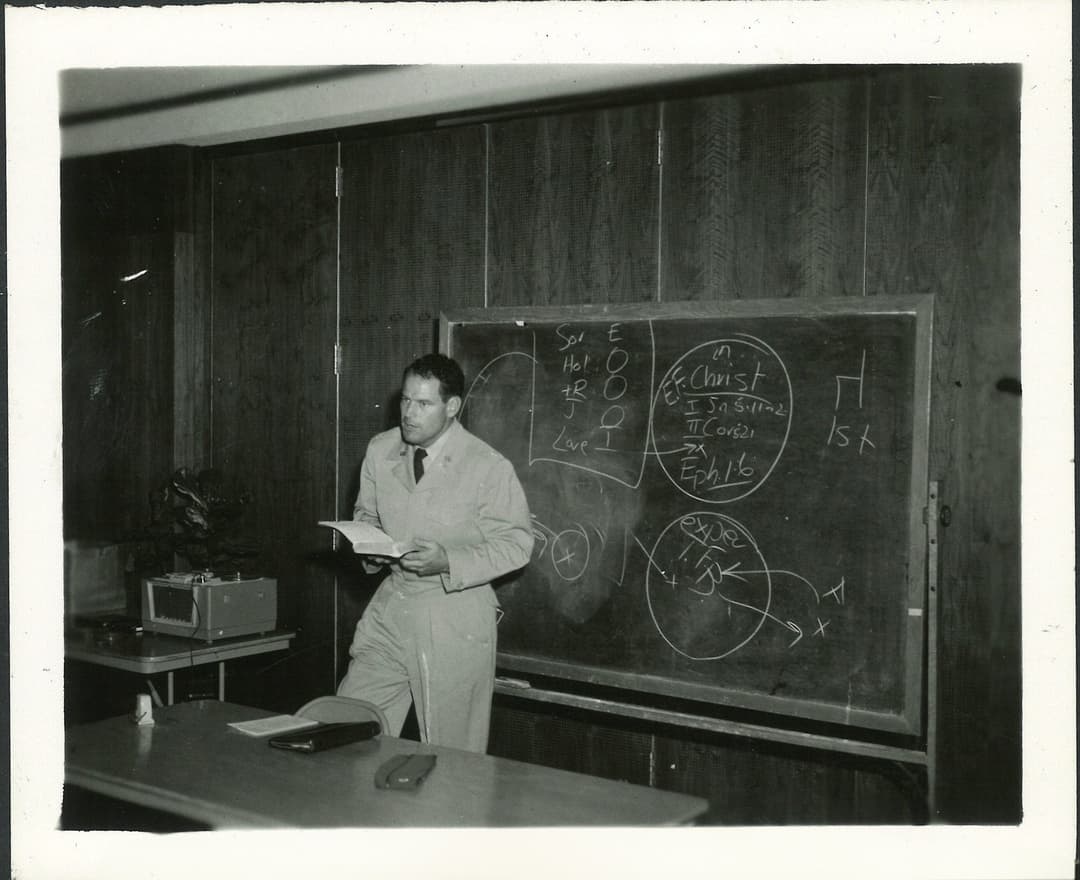
Today, the catalogue of Thieme material is vast—offering more than eleven thousand hours of sermons, fifty books and leaflets, plus a sizable dictionary of doctrinal terms. All are given in grace. And all are the result of one man's single-minded desire to study and teach the Word of God.
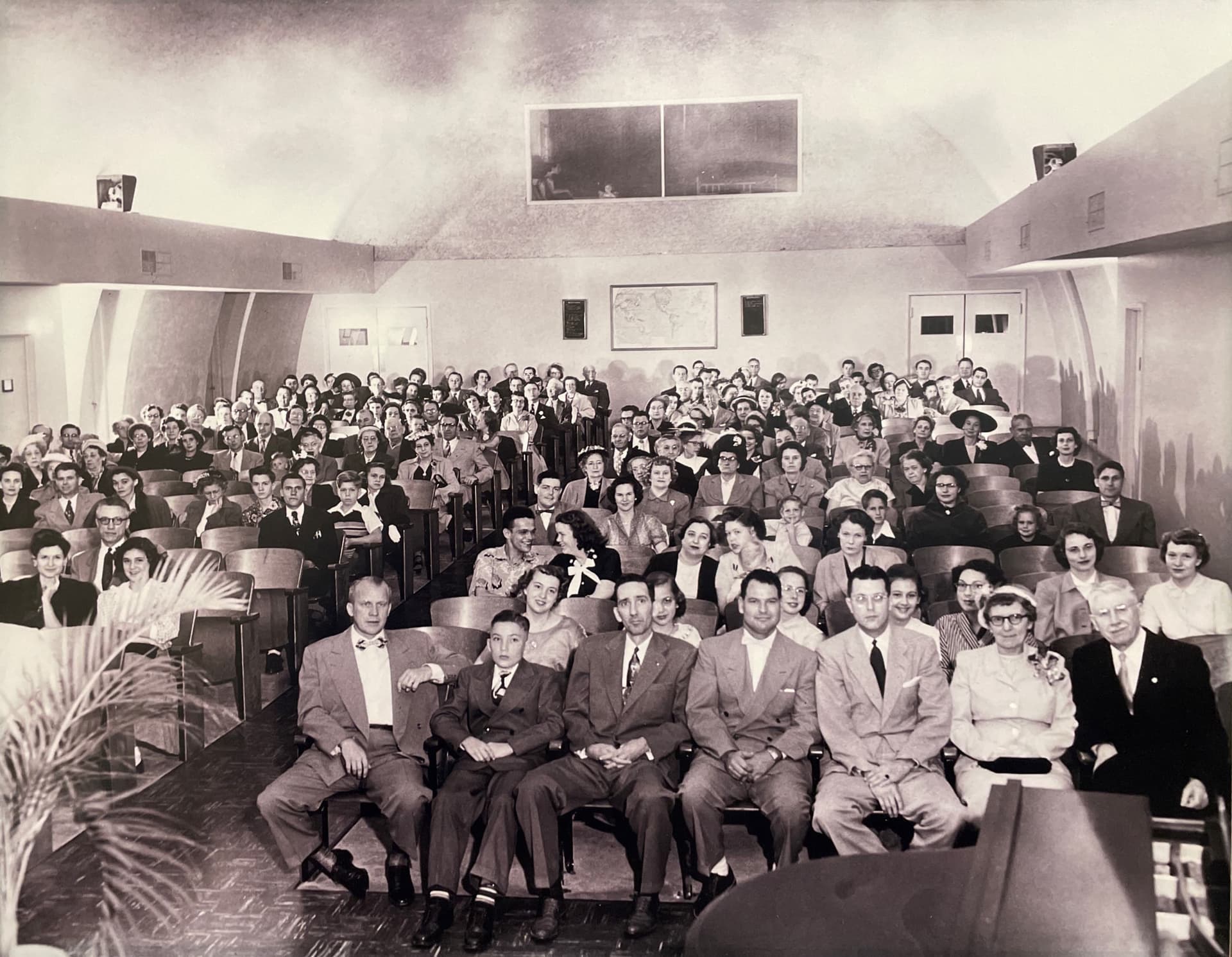
But the story of the ministry begins before a single syllable was recorded or a doctrinal word published. In 1950, Pastor Thieme's flock consisted of a small group of local believers. At Berachah Church, a modest Quonset hut-type building in downtown Houston, they gathered twice a week to hear their pastor's straightforward, illustrative messages. The solid food of Bible doctrine was exactly what this congregation wanted.
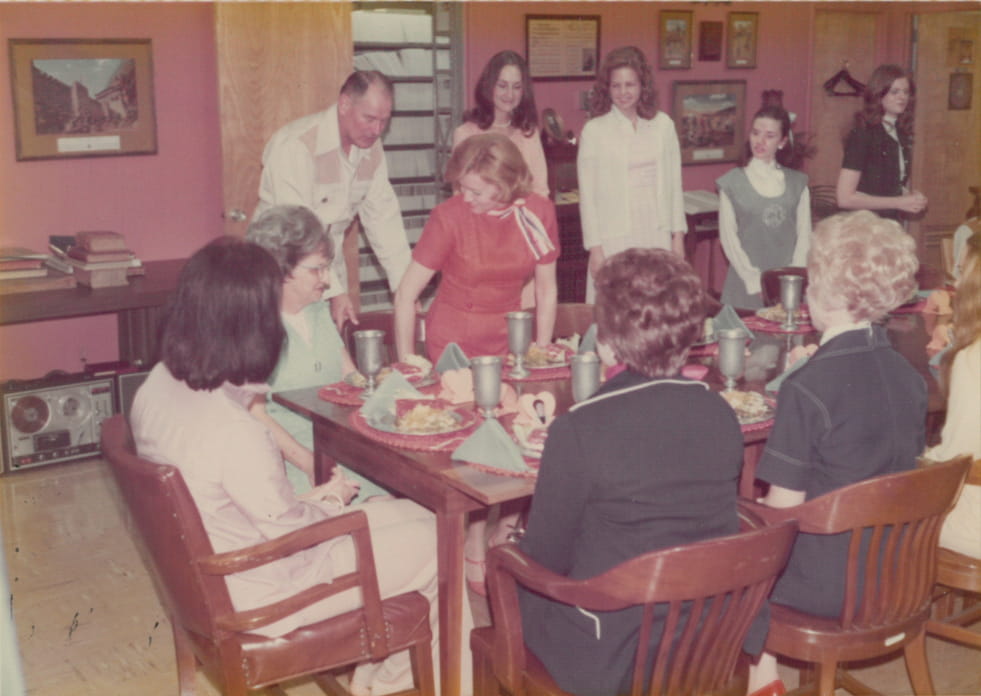
As more and more locals came to hear the sermons, one parishioner became adamant that believers elsewhere needed Thieme's teaching. So she loaded a red wagon with a reel-to-reel tape recorder and parked it at the front of the small auditorium. Before long, the front floor was lined with recorders of parishioners wanting their own copies to share. Meanwhile others joined in compiling the pastor's outlines to distribute as study guides. And there began dissemination of the Thieme ministry as we know it today.
By the end of that decade, and solely at the congregation's initiative and expense, lessons were reaching believers, pastors, and missionaries in multiple states and abroad.
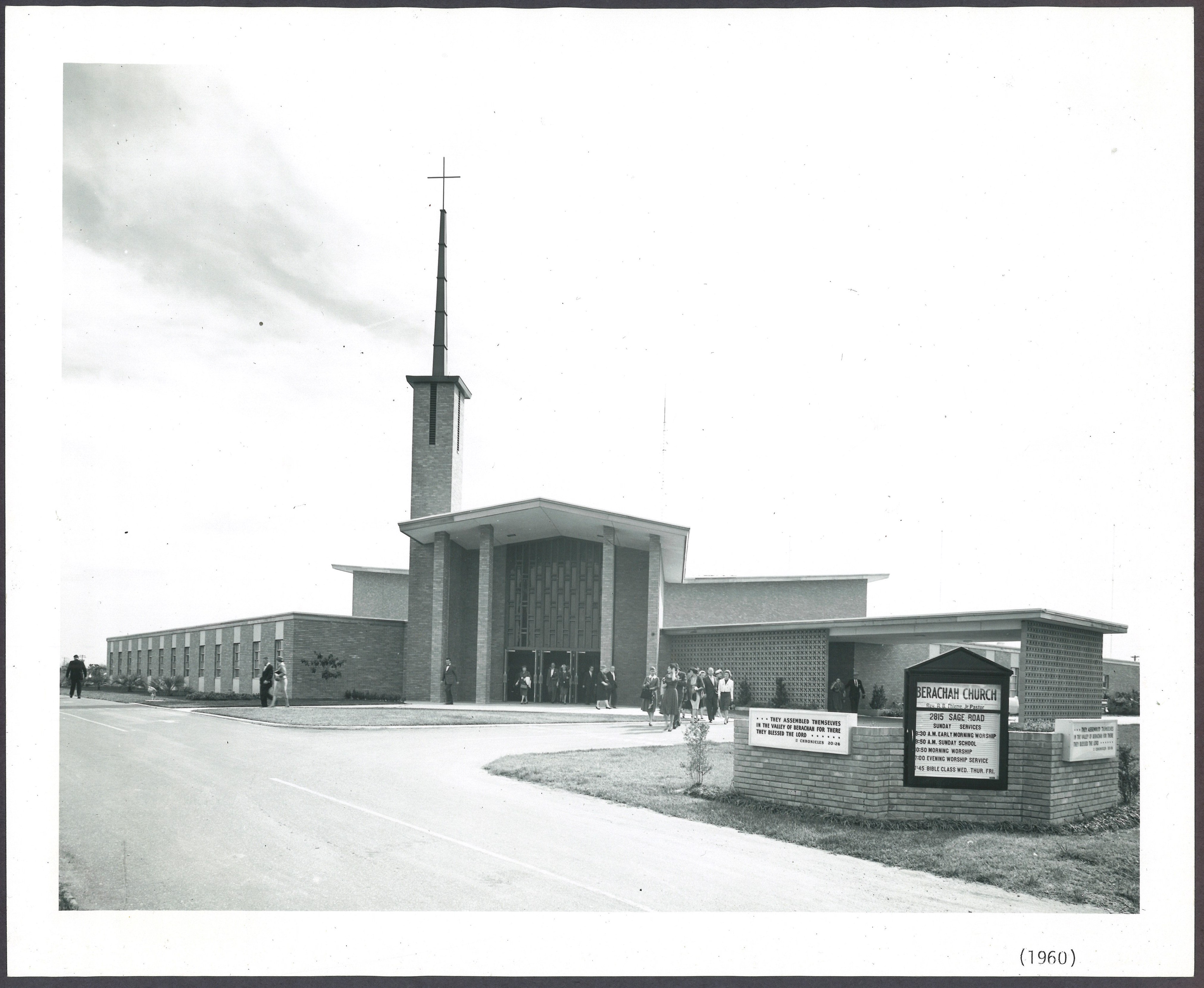
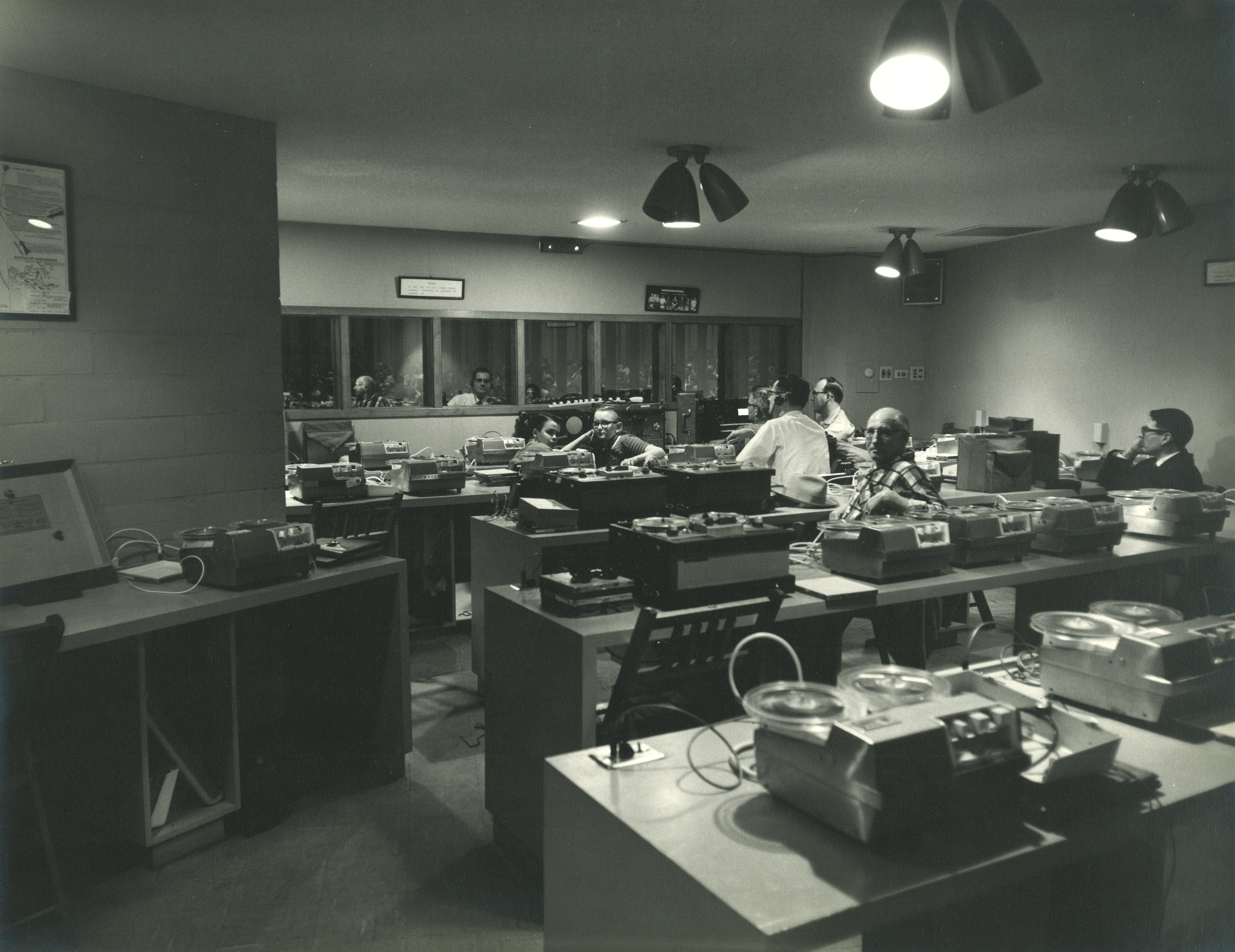
Berachah Church relocated in 1959 to its current facility on Sage Road at West Alabama. Press coverage on the sprawling structure's modern design and accommodations gave special attention to "an unusual recording room" with 34 stations. One columnist used "religion by tape recorder" to describe this new kind of church where individuals were allowed, even encouraged, to tape the messages. †
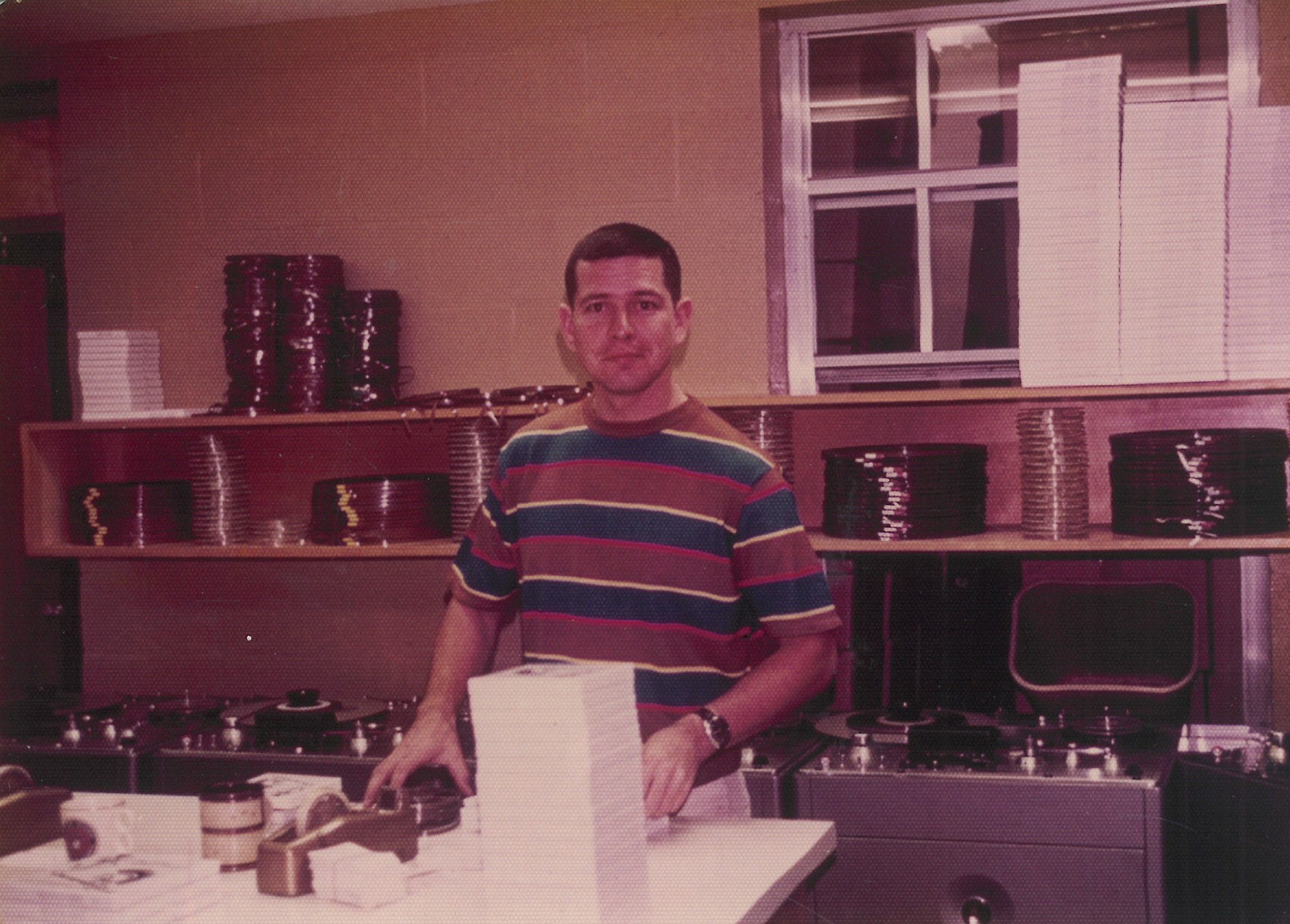
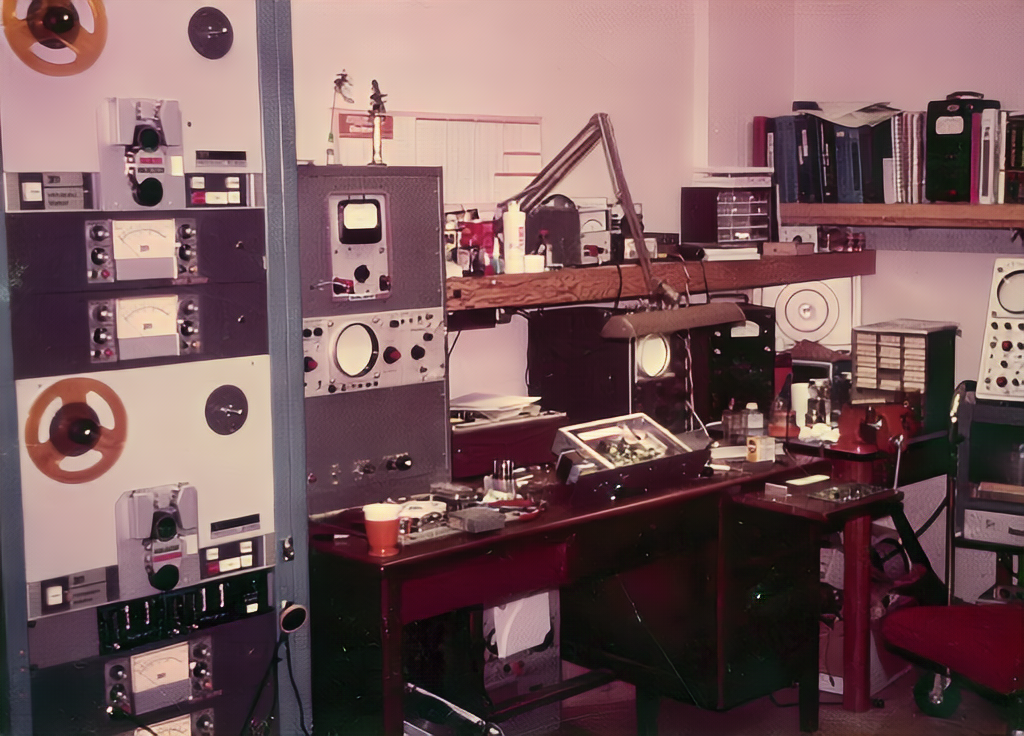
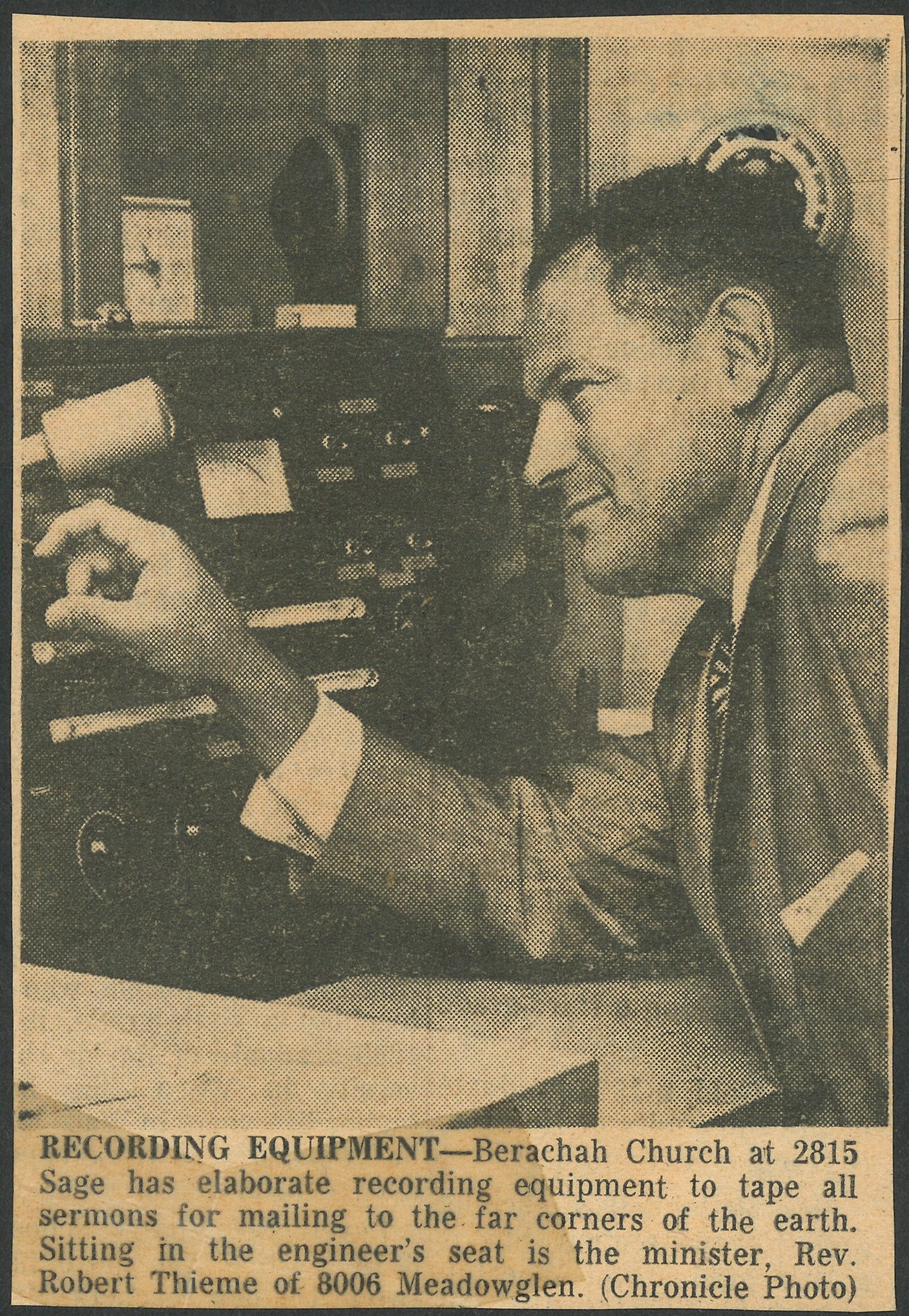
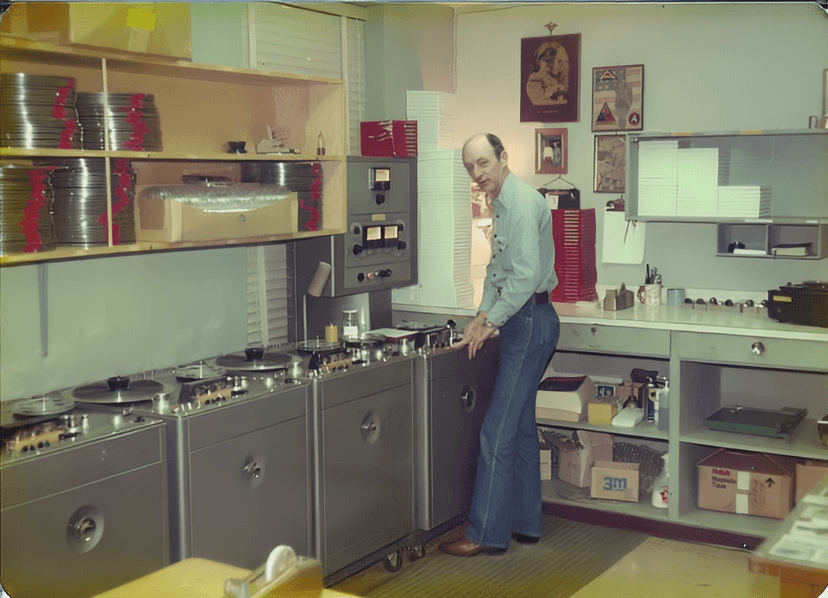
Within a year the recording room (plus any surplus space with electrical outlets) overflowed with personal reel-to-reel machines. And from there occurred a chain reaction of listeners letting others record their tapes and so on. The prolific pastor, who was juggling over six weekly Bible classes with surging requests for outside appearances, decided it was time for an official in-house operation. So a recording system complete with duplicators and manpower was set in motion. Also engaged were several personnel to condense his sermons into bound books to be offered along with the tapes.
Almost as fast as the reels could spin, journalists began noting the church's "elaborate recording equipment for taping all sermons for mailing" and the out-of-state gatherings with "unusual Bible classes, based on taped messages of R. B. Thieme, Jr." They spoke of this "strange phenomenon that is sweeping the country . . . People of many denominations o'er the country are sending for his tapes." ‡
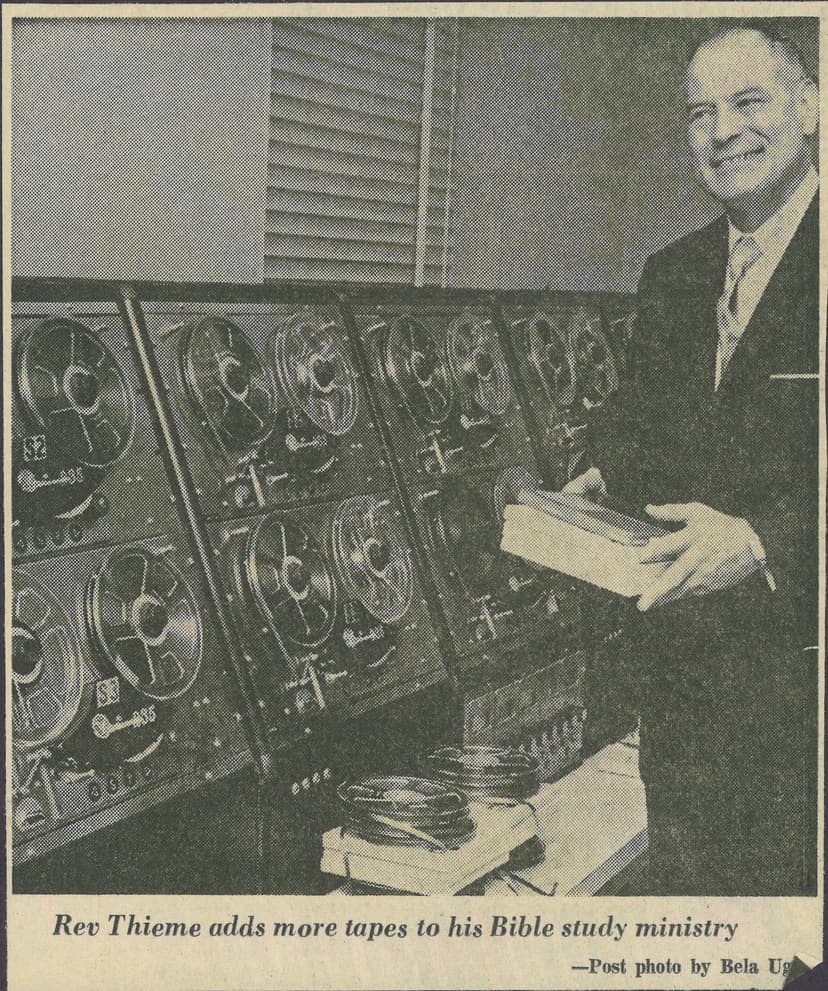
By 1967, the department named Berachah Tapes and Publications ("T&P") was formalized. Under Thieme's ironclad policy, anyone who desired Bible teaching could receive his materials free of charge, without obligation. In his own words, "Grace is not for sale. If God is in it, grace will find a way." Complete dependence on grace also precluded efforts to promote the ministry or build a following. Thieme insisted, "It is my responsibility to be prepared with the teaching of the Word of God. If I am faithful in studying and teaching, then God provides the hearers."
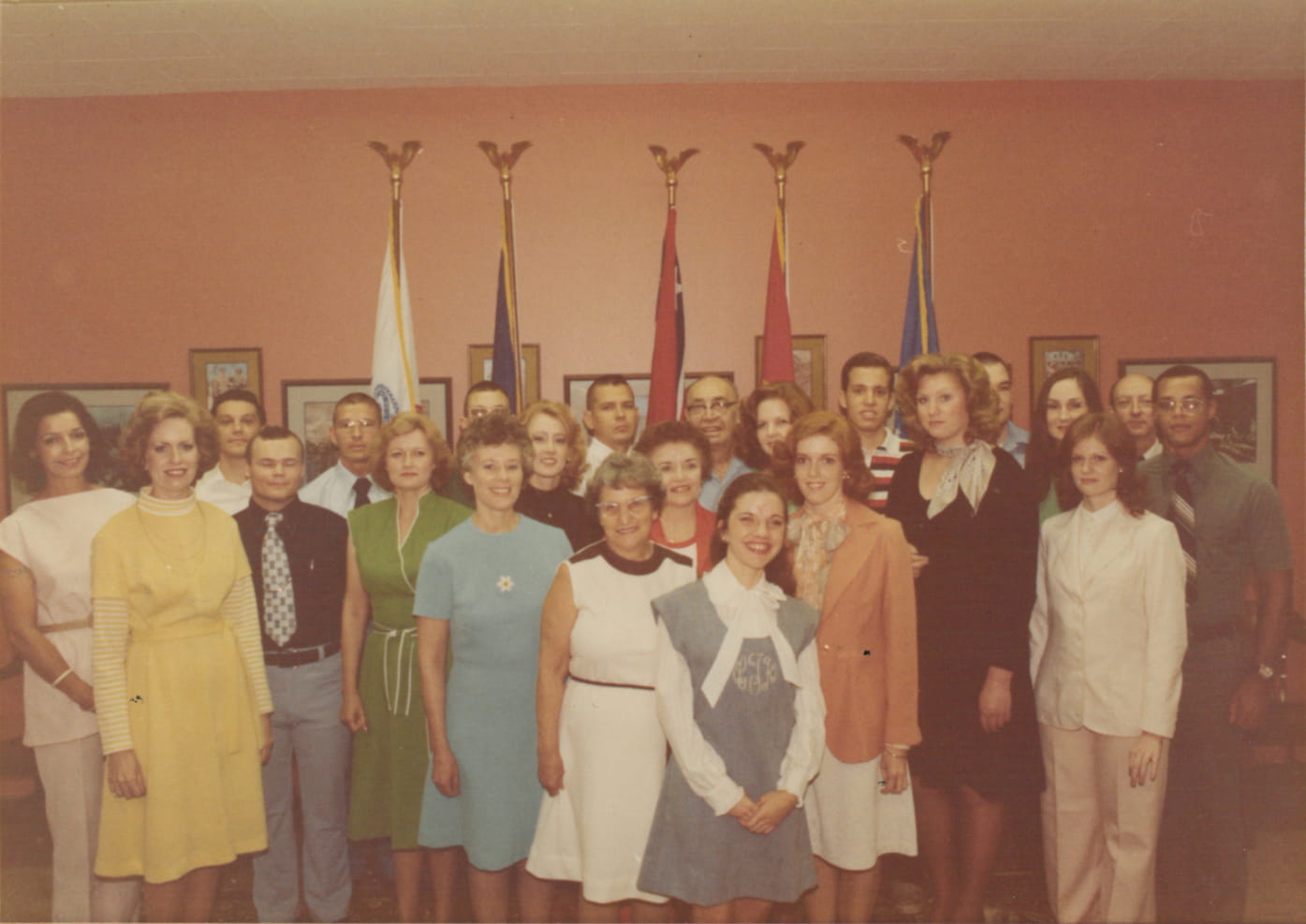
As the 1970s unfolded, the 1,000-seat auditorium brimmed each night with eager note takers who also stocked their homes with tapes and pubs. In military encampments, the distant sound of a Thieme tape, even a tattered book dropped on trail, captured the attention of soldiers who instantly enlisted as lifelong adherents. Believers across the U. S. and beyond formed tape groups that met regularly to listen to recorded lessons. And where demand was especially high, telephone hook-up groups listened live by dialing in to the church's sound system.
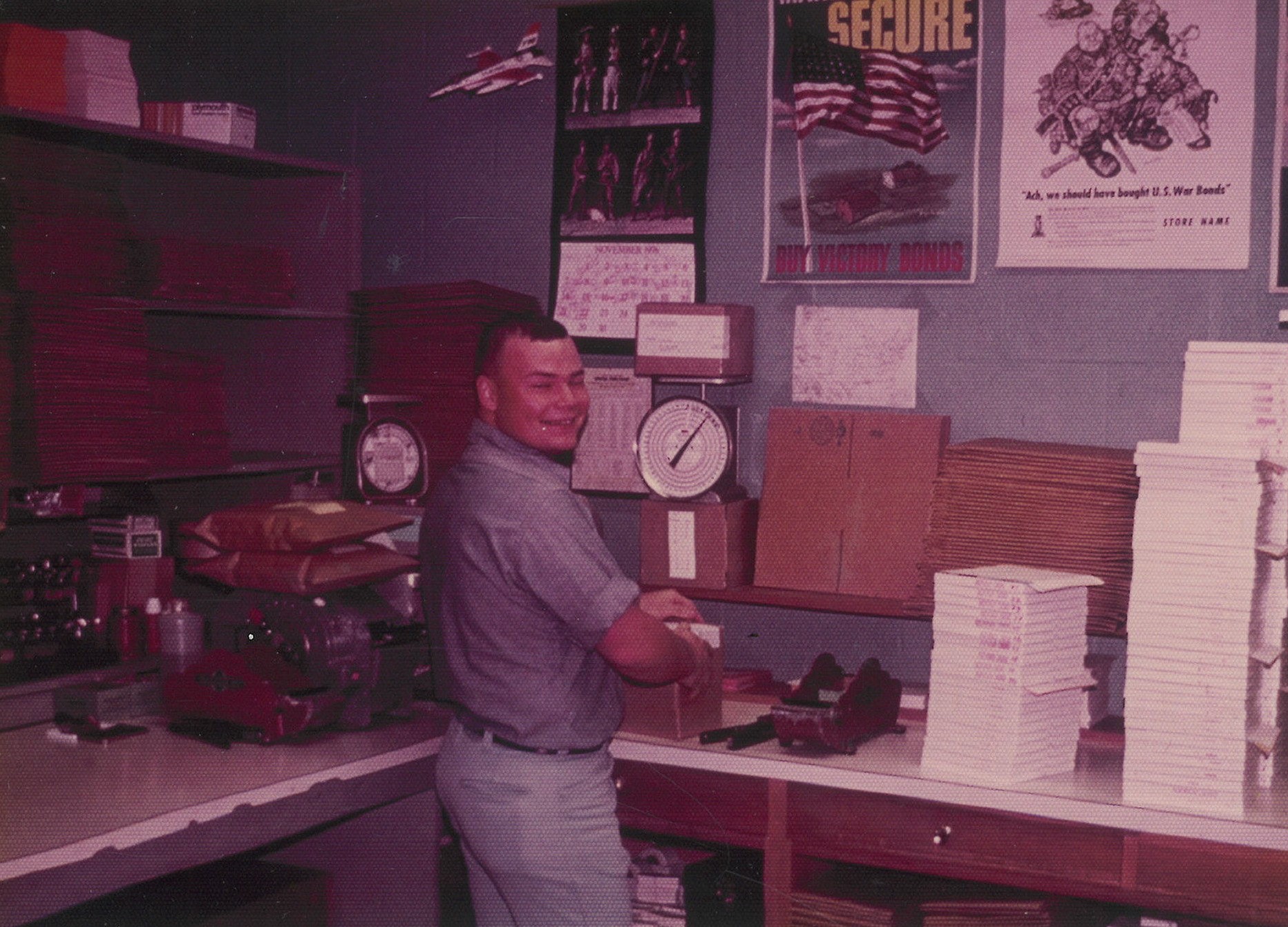
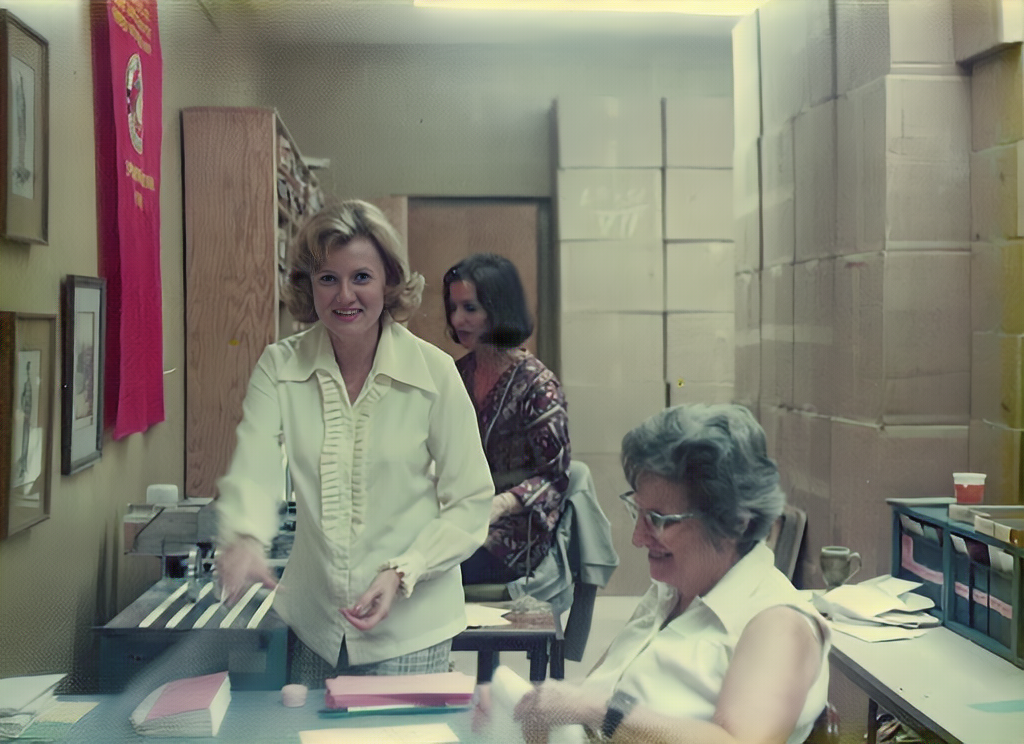
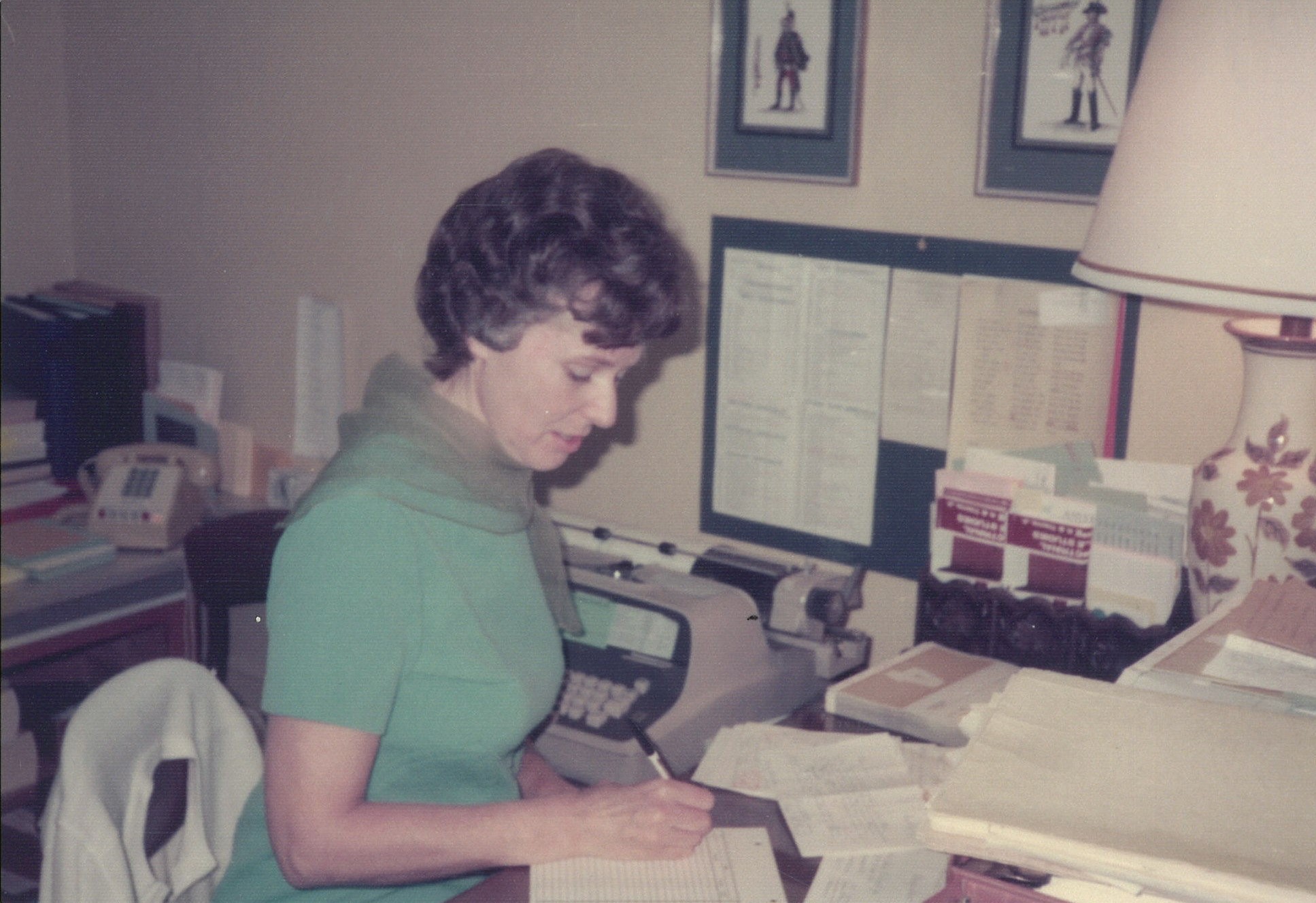
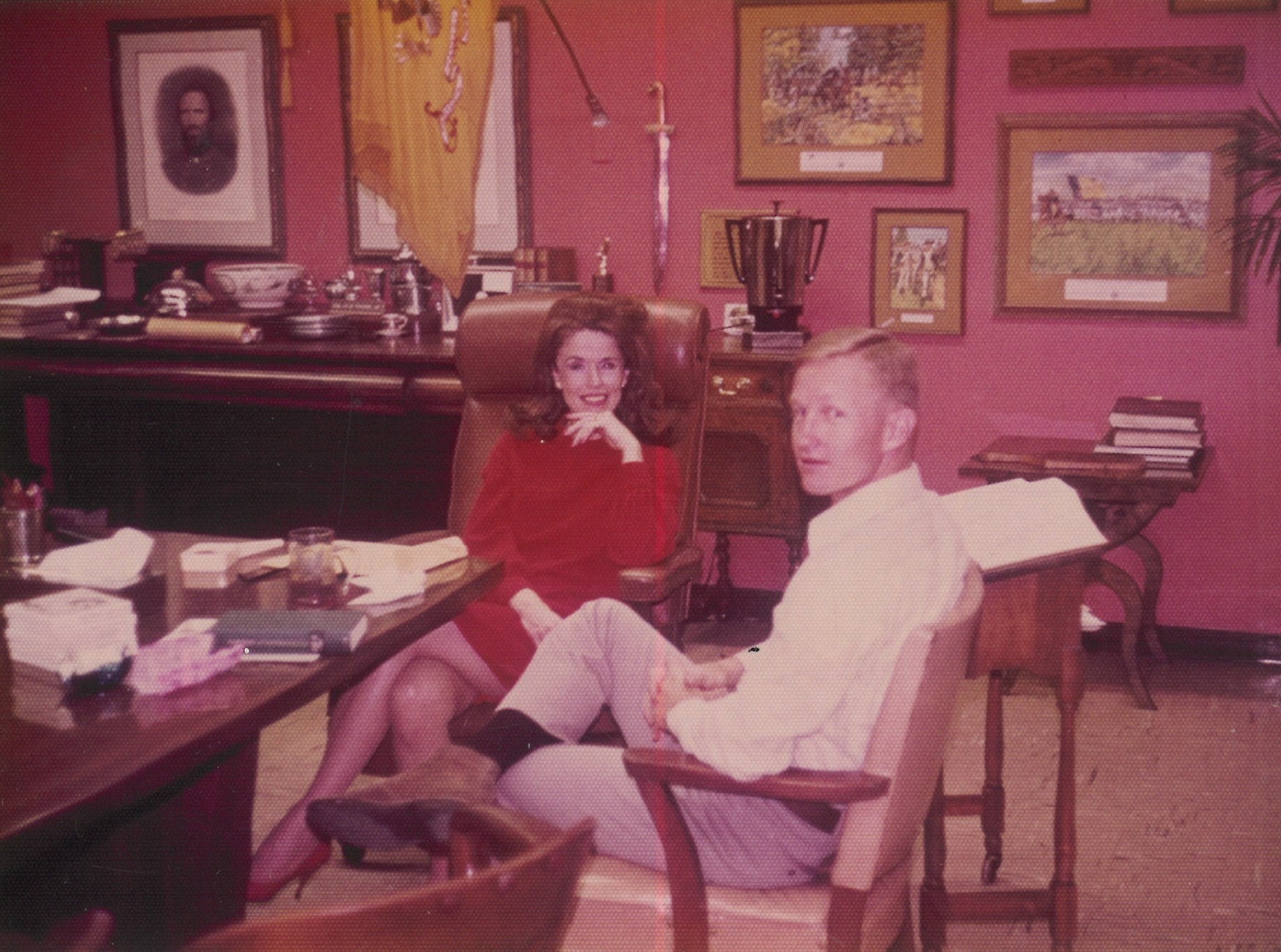
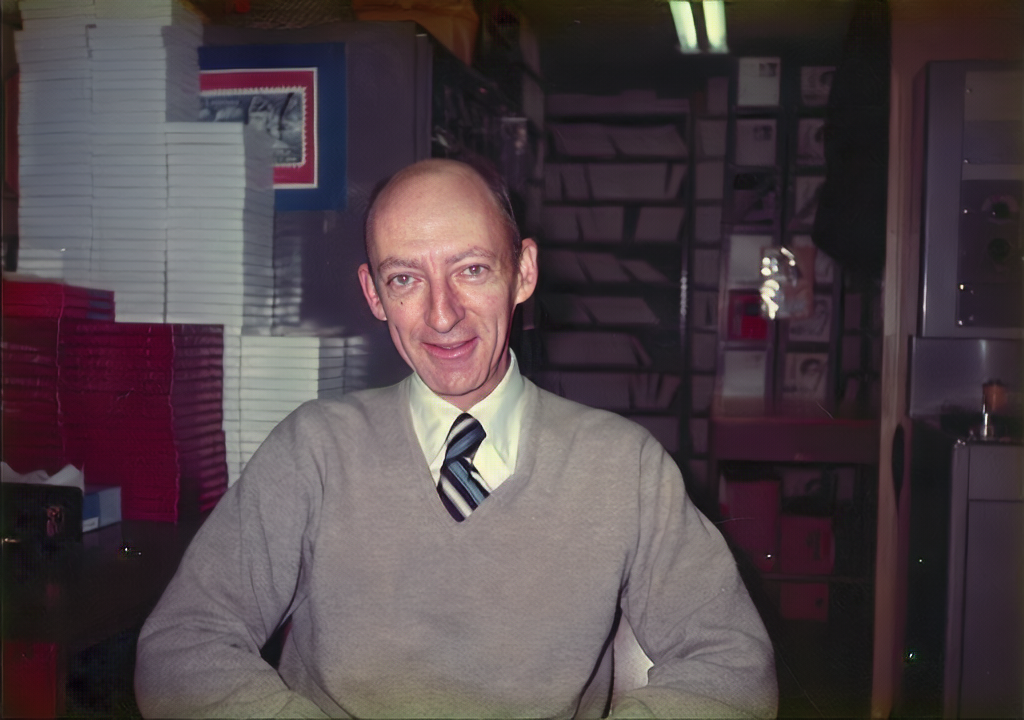
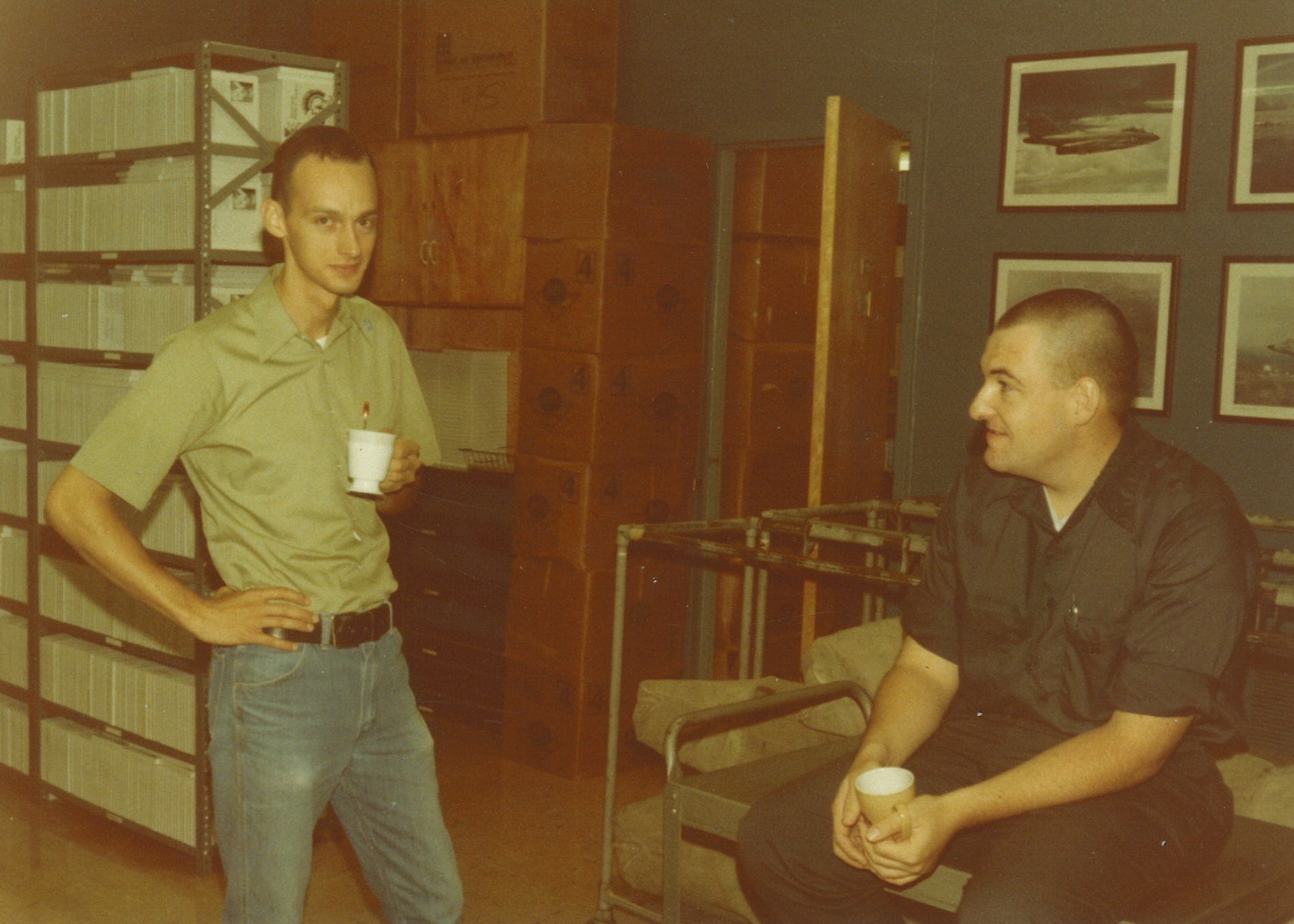
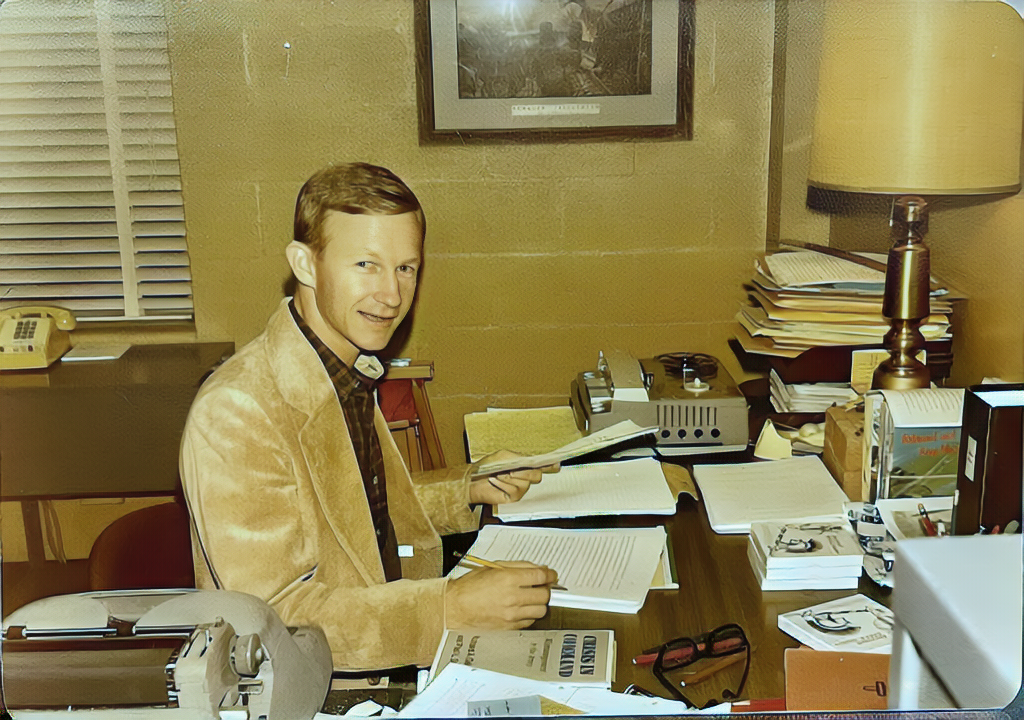
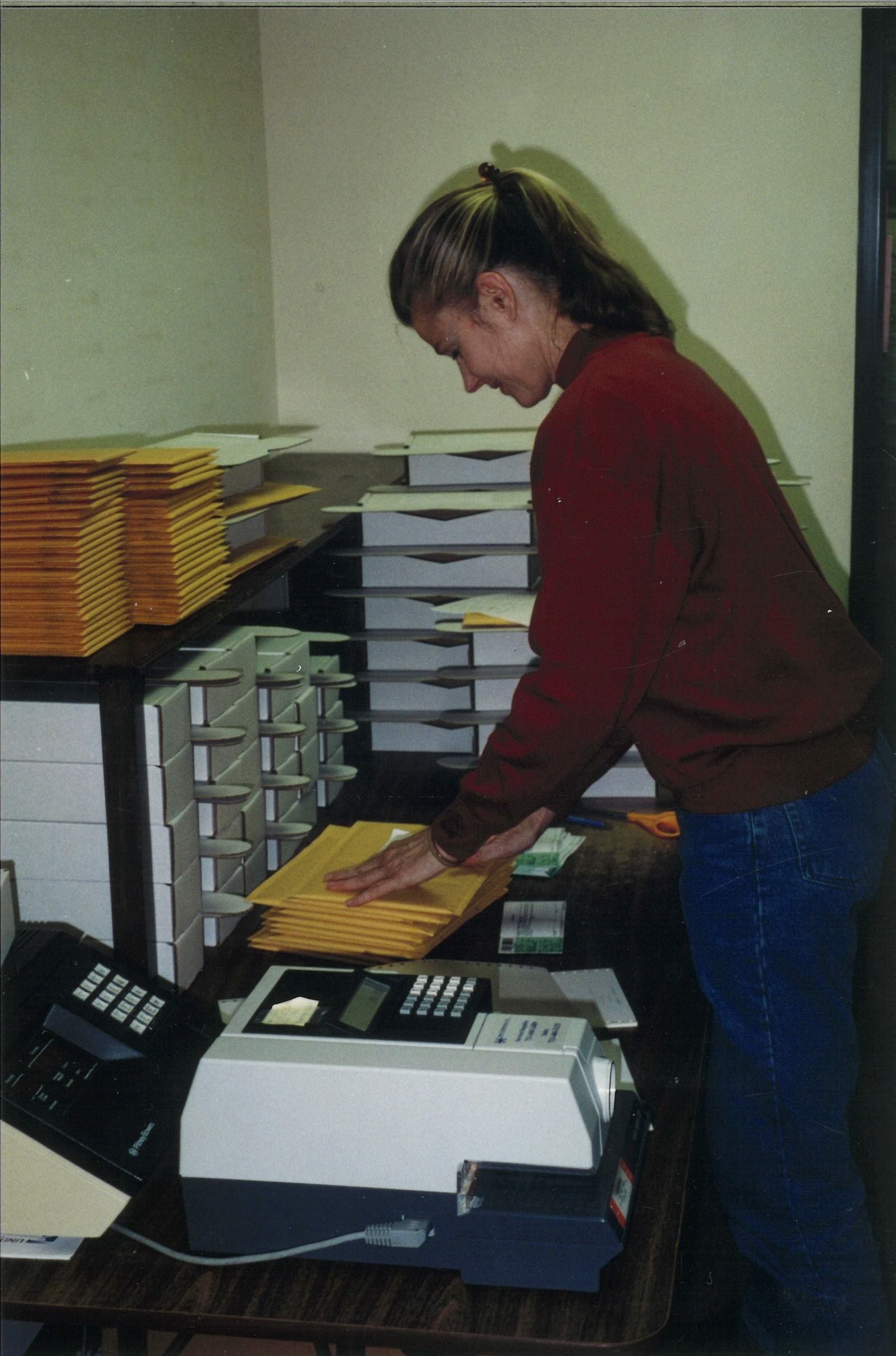
Inside the church offices, phone and mail staff processed orders throughout the day and production crews worked consecutive shifts to duplicate the master reels. Quiet spaces held editors transforming the miles of audio into publications on specific doctrines. Those ordering Thieme's teaching were called "tapers," and each was issued a unique "taper number" to expedite the process. When production and storage stretched the Sage Road limits, off-site facilities—most notably the benchmark Butte Creek—graciously took shape and carried the load. By the late 1970s, nearly 100,000 lessons and books were going out each month. Thankfully, audio technology was progressing from bulky reel-to-reels to smaller, more portable cassette tapes.
R. B. Thieme, Jr., Bible Ministries—the current organization—was incorporated in 1982. Its mission was to preserve and disseminate the substantial, growing Thieme library. Over the following decades, technological advancements added video recordings to the catalogue, replaced cassette tapes with digital media, and helped facilitate distribution of his messages into every corner of the world.
Wherever hungry souls resided—whether in churches, prisons, mission fields, or ordinary households—Thieme's doctrinal teaching found its way there. The pastor himself, in a Bible class dated 7 June 1993, reflected on the always present, amazing grace of God:
Thieme retired from the pulpit in 2003, leaving behind an impressive doctrinal legacy. Subjects span every aspect of the person of God, His design for human history, and His plan for believers on earth.
Bible class recordings are available today in various digital forms, with books (English and Spanish) offered digitally as well as in print. While the taper number has been replaced with a name code, many listeners still call themselves "tapers" in tribute to the previous era. The staff, too, is privileged to retain the historic "T&P" label.
Although Pastor Thieme has long departed into eternity (August 2009), God's faithfulness continues to those left behind. The mission of R. B. Thieme, Jr., Bible Ministries still abides by the policy of Grace First. In every lesson, on every page, is the reminder that all doctrine is related to grace. It is the grace and power of God that bestowed the spiritual gift of pastor-teacher, kept His servant on course, and will continue to deliver the doctrinal messages to positive believers near and far. After all, "It isn't the man but the message. Preachers come and preachers go, but the Word of God abides forever."
† Houston Press, May 9, 1959; Houston Post, May 9, 1959.
† Houston Chronicle, October 31, 1962; Santa Ana Register, July 1967; The Palos Verdes Review, February 1965.